A drone roof inspection cost in Ireland typically starts at a few hundred euro and runs up toward €450 to €950 for a larger commercial roof. The exact figure depends on size, pitch and access, but that number is the easy part. The harder question is what happens if you skip it. A missed flashing or a hairline crack around a chimney doesn’t announce itself.
It sits there through one winter, then two, and by the time it shows up as a stain on your ceiling or a line item your insurer refuses to cover, the job has quietly gone from an inspection to a re-roof. Price is what you pay today. The cost of not knowing is what you pay later, and it’s usually a lot higher.
What Determines Drone Roof Inspection Cost?
Every quote for a professional drone roof inspection comes down to the same handful of variables, and once you understand them, the “it depends” answer most companies give starts to make sense.
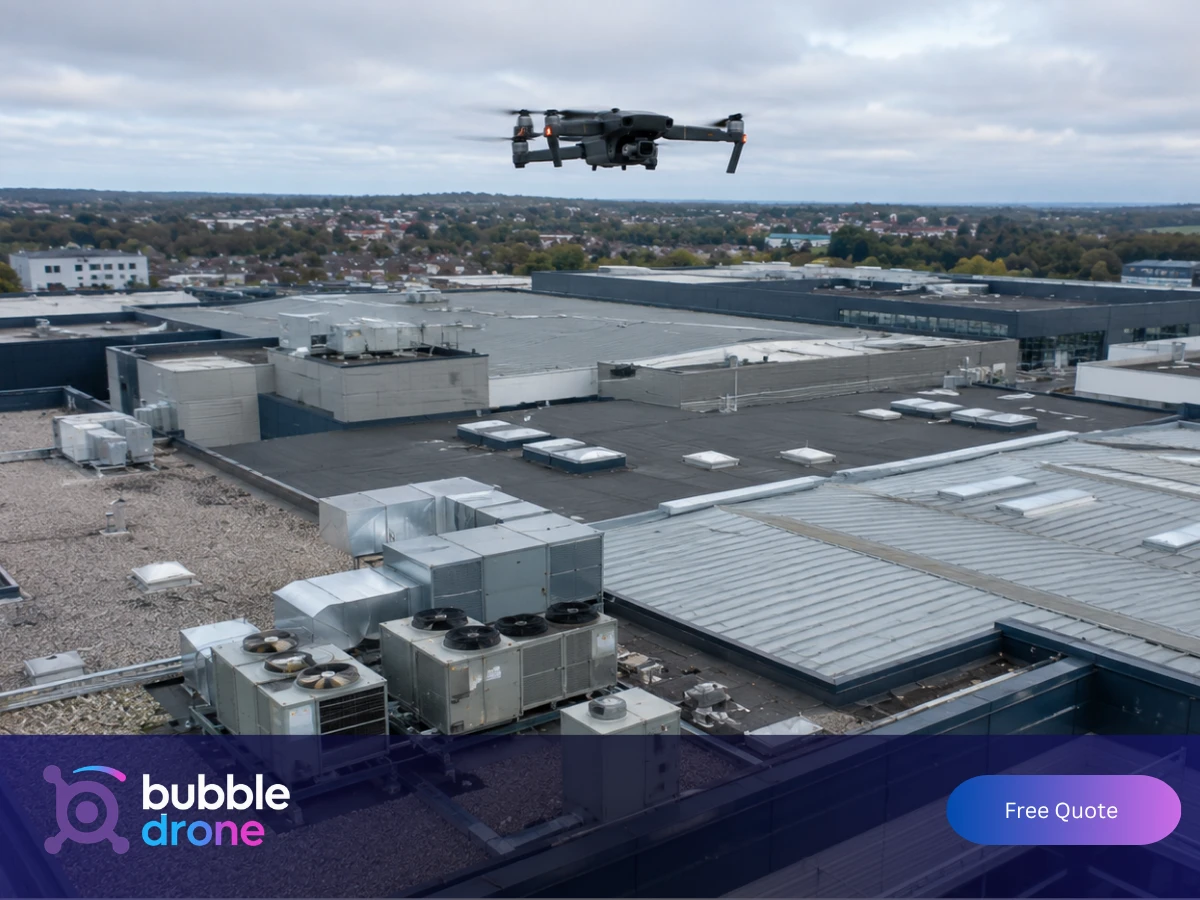
Roof size and complexity is the obvious one. A modest bungalow with a simple flat roof section takes a fraction of the time to fly and process compared with a large commercial building with multiple roof planes, plant equipment, and awkward junctions.
The drone still covers the same square metres either way, but a complex roof needs a tighter grid plan, more overlapping images, and more careful review of the data afterward.
Prices vary depending on the number of separate roof sections and how much of the surface is hidden behind parapets, solar panels or rooftop units.
Access and airspace matter more than people expect. A detached house in open countryside is a straightforward site visit. A building in a town centre, near an airport, or inside controlled airspace needs additional permissions and planning before the drone ever leaves the ground. That extra coordination work is invisible to the client but very real in terms of time, and it shows up in the price.
Whether thermal imaging is included changes the scope significantly. Standard high-resolution photography and video will show you missing tiles, damaged ridge caps, cracked flashings and obvious structural issues.
Thermography goes further, using an infrared sensor to detect temperature differences across the roof surface that reveal trapped moisture, failed insulation, or heat loss you would never spot from ground level.
A drone equipped with a thermal sensor costs more to operate and takes longer to process, so it typically sits at a premium over a standard visual inspection.
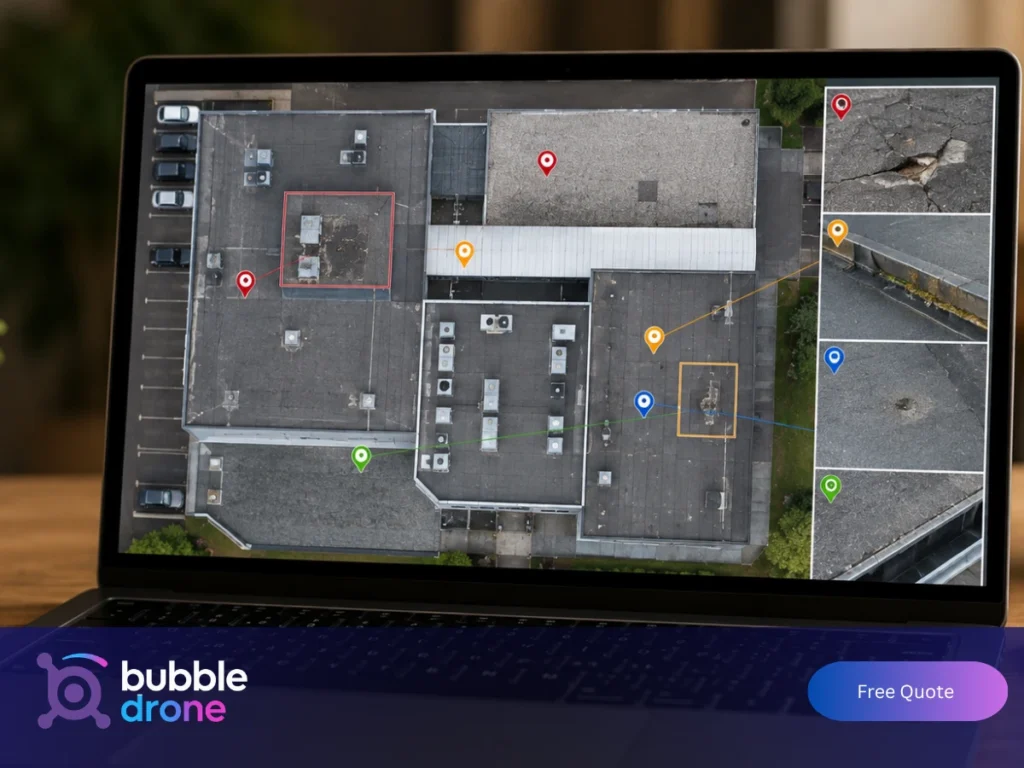
Finally, the deliverable itself affects cost. A simple set of annotated high-resolution imagery is one thing. A full roof inspection report with a defect log, an orthomosaic map stitched from hundreds of individual images, or a 3D model of the entire roof for planning or insurance purposes represents considerably more processing time, and the price reflects that.
Drone Roof Inspection vs Scaffolding and Cherry Pickers: Cost Compared
The reason drone roof surveys have taken over from scaffolding and cherry pickers isn’t really about being trendy. It’s about what each method actually costs once you add up time, risk and disruption, not just the invoice.
| Method | Typical Cost Range | Site Disruption | Time on Site |
| Drone roof inspection | Residential from a few hundred euro, commercial €450-€950 | Minimal, no physical access to the roof | Hours |
| Cherry picker / aerial work platform | €1,000-€1,800 | Moderate, may need road or footpath permits | 1-2 days |
| Rope access | €2,500-€4,500 | Low physical footprint, high safety cost | Several days |
| Scaffolding-based inspections | €5,000+ | Significant, weeks to erect and remove | 2-6 weeks |
Once you see the numbers laid out like that, the appeal of a drone roof survey stops being about novelty and starts being obvious. You get the same visual coverage, and in the case of thermal imaging, considerably more useful data, for a fraction of the time and cost of putting a person physically on the roof. Nobody needs to climb a ladder. Nobody needs to physically access the roof at all.
That single fact removes most of the liability and insurance headaches that come with traditional access methods.
Residential Roof Inspections vs Commercial Roof Surveys
The cost conversation looks different depending on which side of the fence you’re on, and most articles on this topic blur the two together.
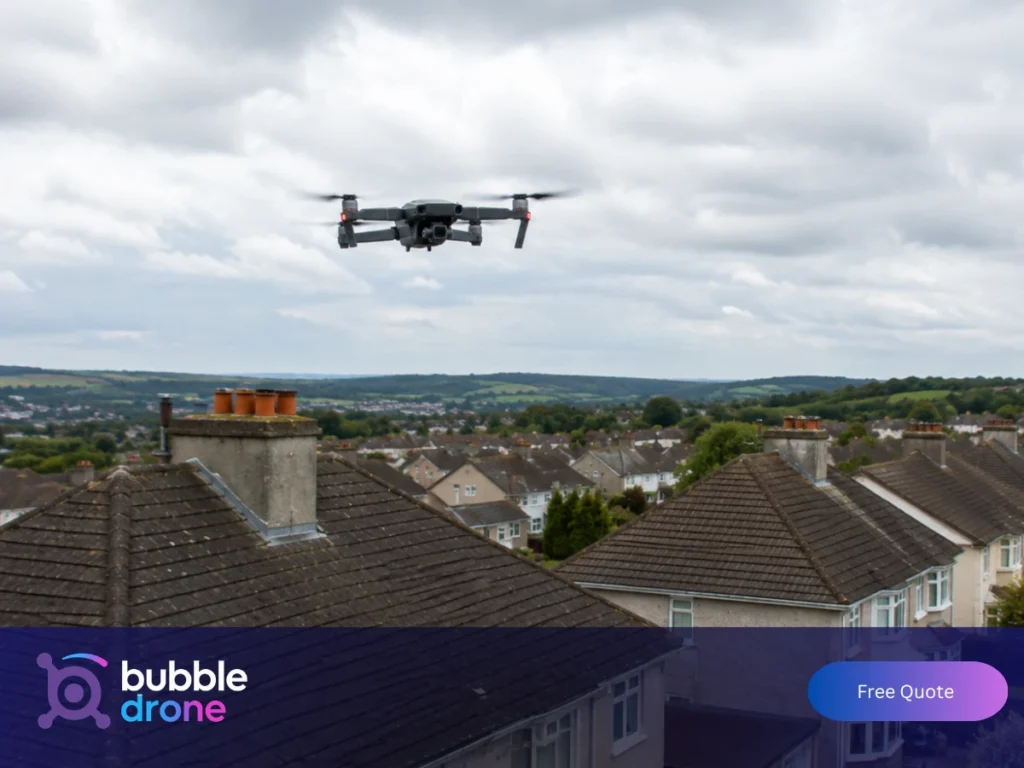
For a residential roof, the job is usually a single site visit. A homeowner wants to know the condition of a roof before buying a property, after a storm, or ahead of a renovation.
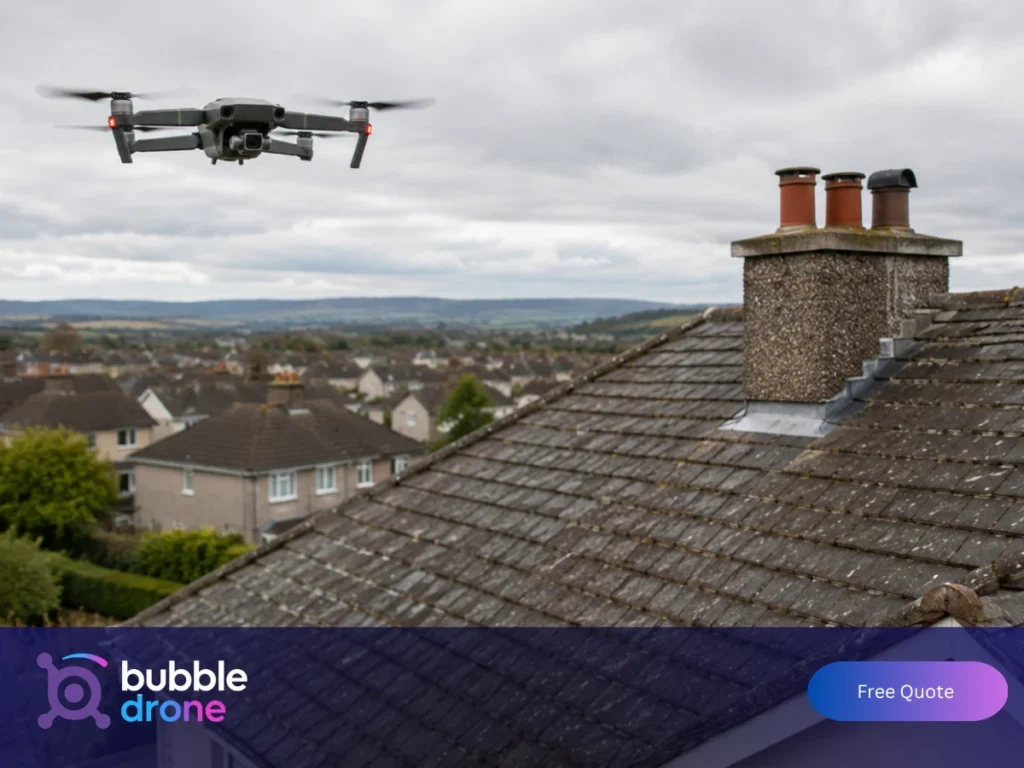
The inspection is quick, the roof surface is relatively straightforward to capture, and the report tends to focus on the practical questions: are there any missing or lifted tiles, is the chimney sound, are the flashings intact, is there any visible sign of water ingress.
This is often the same information a home inspection would flag, except captured from angles nobody could reach safely with a ladder.
Commercial roof surveys are a different scale of job entirely. A commercial building typically has a larger, flatter roof with plant equipment, multiple drainage points, and a much bigger financial exposure if something goes wrong.
Facility managers commissioning a drone roof survey are usually building a maintenance record over time, not just checking a single point in time.
That means the inspection data gets compared against previous flights, defect logs are tracked year on year, and the report is often written with an insurer or a building surveyor in mind rather than just the property owner.
Neither version is more or less “real” drone work. They’re simply different jobs with different stakes, and a quote for one should never be used to estimate the other.
What’s Included in a Drone Roof Inspection Report?
The deliverable is where a proper drone roof inspection earns its cost, and it’s worth being specific about what that includes rather than leaving it vague, because “you get some photos” undersells the whole point.
At minimum, you should receive high-resolution imagery covering the entire roof, taken from angles and distances that would be genuinely difficult or dangerous to capture any other way.
Beyond that, a proper inspection includes a written summary of any defects found, whether that’s a lifted ridge tile, a failing flashing detail, or a section of flat roof showing early signs of ponding.
Where thermal imaging is part of the job, the report should flag specific areas of heat loss or suspected moisture, not just hand over raw infrared footage and leave the client to interpret it.
For larger or more complex jobs, the deliverable can extend to an orthomosaic, essentially a single stitched-together map of the entire roof built from hundreds of overlapping images, or a full 3D model that lets an engineer, insurer, or conservation officer examine the structure without ever visiting site.
That level of detail matters most when the inspection data needs to support a decision, whether that’s an insurance claim, a planning application, or a maintenance budget for the year ahead.
Why Choose a Licensed Drone Operator for Roof Inspections?
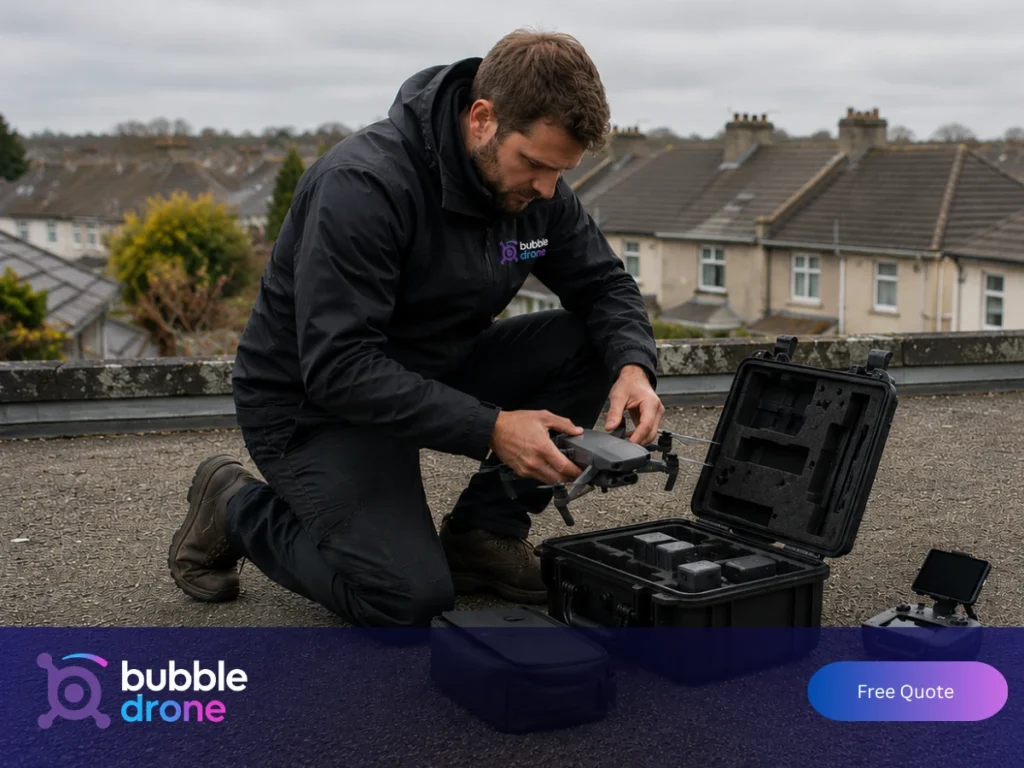
Here’s the part most pricing conversations skip entirely. The cost of a drone roof inspection isn’t just paying for a drone to fly over a building. You’re paying for a licensed operator who understands airspace restrictions, carries proper insurance, and knows what a defect actually looks like once the footage comes back.
Any roofing contractor can point a consumer drone at a roof and take a few photos. That isn’t the same as a commercial drone survey carried out by an operator working under proper EASA authorisation, with drone insurance in place and a workflow built around producing usable inspection data rather than nice-looking video.
In Ireland, that distinction matters more than most people realise, because a lot of commercial roof inspections happen in or near controlled airspace, where permissions have to be arranged in advance rather than assumed. Insurers are increasingly aware of this too.
A report from a properly licensed drone survey holds up in a way that a phone video from a neighbour’s ladder simply doesn’t.
Frequently Asked Questions
How much does a drone roof inspection typically cost?
Most residential jobs fall well under the commercial range, while larger commercial buildings tend to sit between €450 and €950 depending on roof size, complexity and whether thermal imaging is included. Get in touch with your roof details and we’ll give you an accurate figure rather than a guess.
Is a drone roof survey suitable for a flat roof?
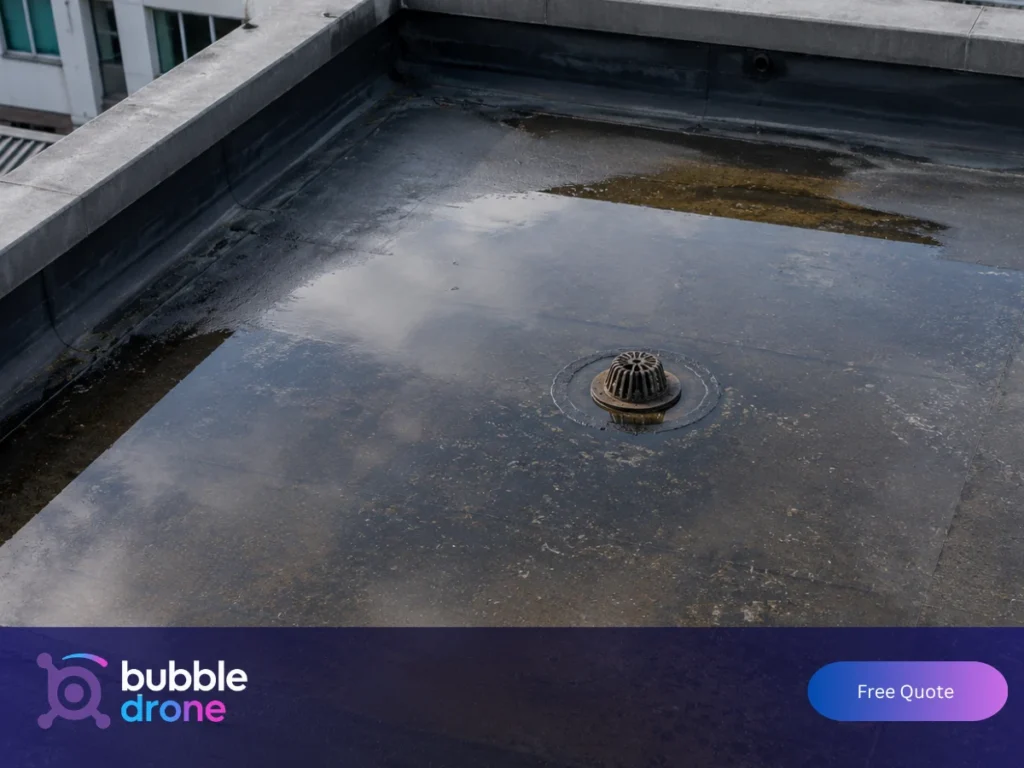
Yes. Flat roofs are actually one of the easier jobs for a drone, since the surface is consistent and drainage issues, ponding and membrane damage are easy to spot from directly overhead.
Do I need scaffolding if I get a drone inspection instead?
In most cases, no. A drone roof inspection replaces the need for scaffolding or a cherry picker for assessment purposes. Scaffolding only becomes necessary afterward if physical repair work needs to happen.
Can a drone actually detect roof leaks?
A standard visual inspection will show obvious signs like staining, missing tiles or damaged flashings. Thermal imaging goes further, picking up temperature differences that indicate trapped moisture behind the roof surface, often before it becomes visible from inside the building.
How long does a drone roof inspection take?
The site visit itself is usually a matter of hours, not days. Inspection time on the roof surface is short. Most of the actual work happens afterward, reviewing the imagery and compiling the report.
Will my insurer accept a drone roof inspection report?
Increasingly, yes. Insurance companies are used to seeing drone inspection reports as supporting evidence for claims and renewals, particularly when the imagery is high-resolution, dated, and comes with a written defect summary rather than raw footage alone.
Get a Drone Roof Inspection Quote in Ireland
If you’ve read this far, you’ve probably already worked out that the number at the top of this article was never really the point. The real value of a drone roof inspection isn’t the price on the invoice, it’s catching the problem while it’s still a two-line entry in a report instead of a claim, a dispute, or a full roof replacement nobody budgeted for.