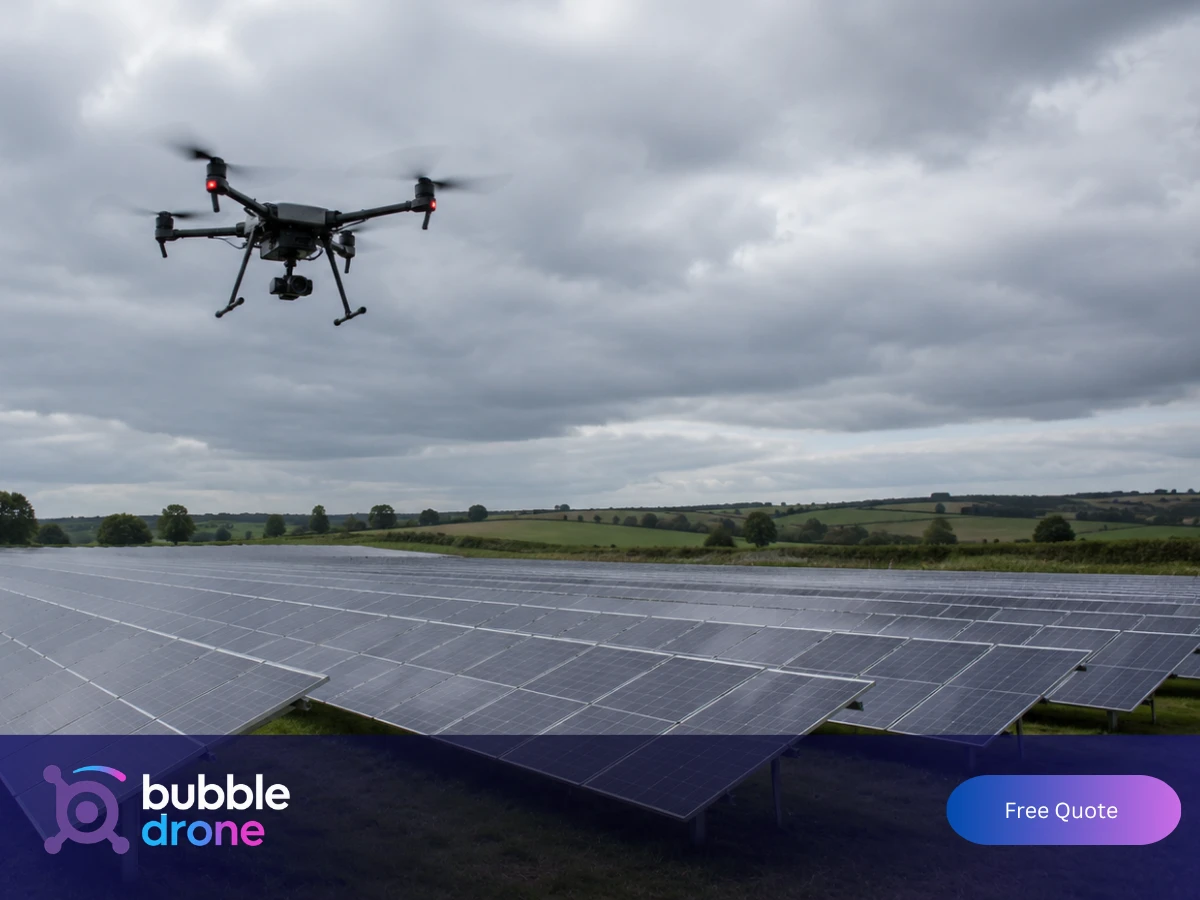
A drone solar inspection works by flying a UAV over a solar array to capture visual and, where thermal equipment is used, infrared data that reveals faults invisible to the naked eye. That second part is the one most homeowners and asset managers don’t know until something goes wrong. A panel can look perfectly fine from the ground, sit there underperforming for a year, and quietly cost its owner hundreds of euro in lost output before anyone notices.
That’s the gap drone inspection closes, and it’s exactly why the technology has moved from a niche add-on to standard practice for solar asset owners across Ireland.
What Happens During a Drone Solar Inspection?
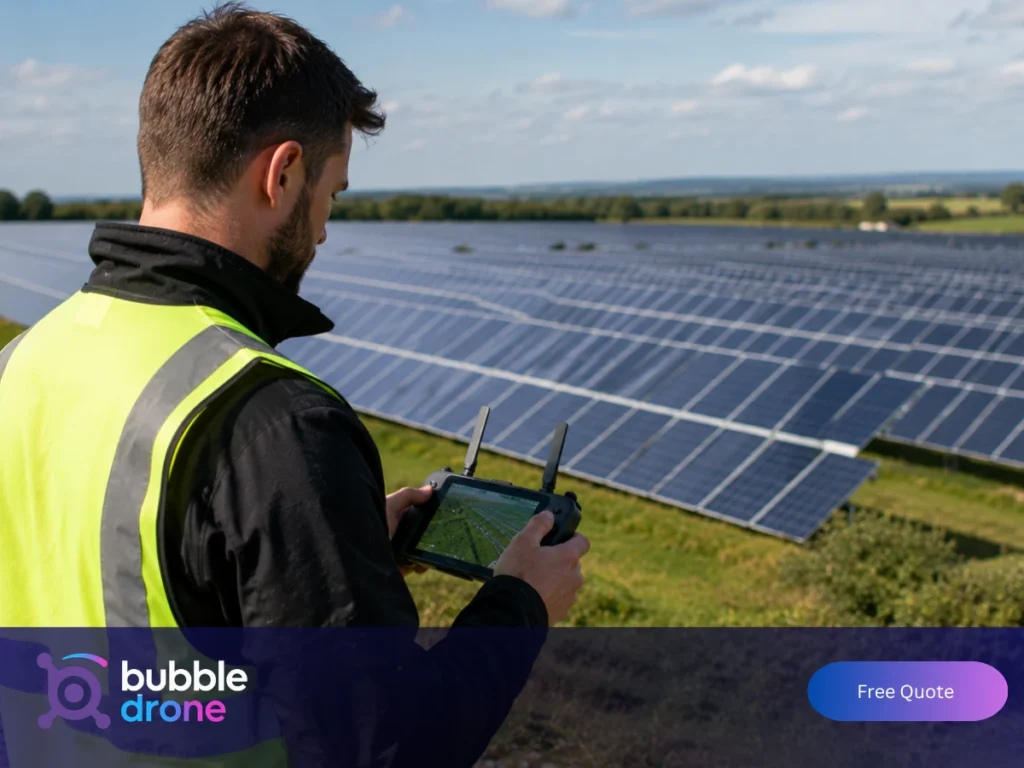
At its core, a drone solar inspection is an aerial data capture exercise. A drone flies a planned route over a solar panel installation, whether that’s a small domestic system or a multi-hectare solar farm, and records imagery of every panel in the array. That imagery gets reviewed for signs of damage, wear, or performance loss.
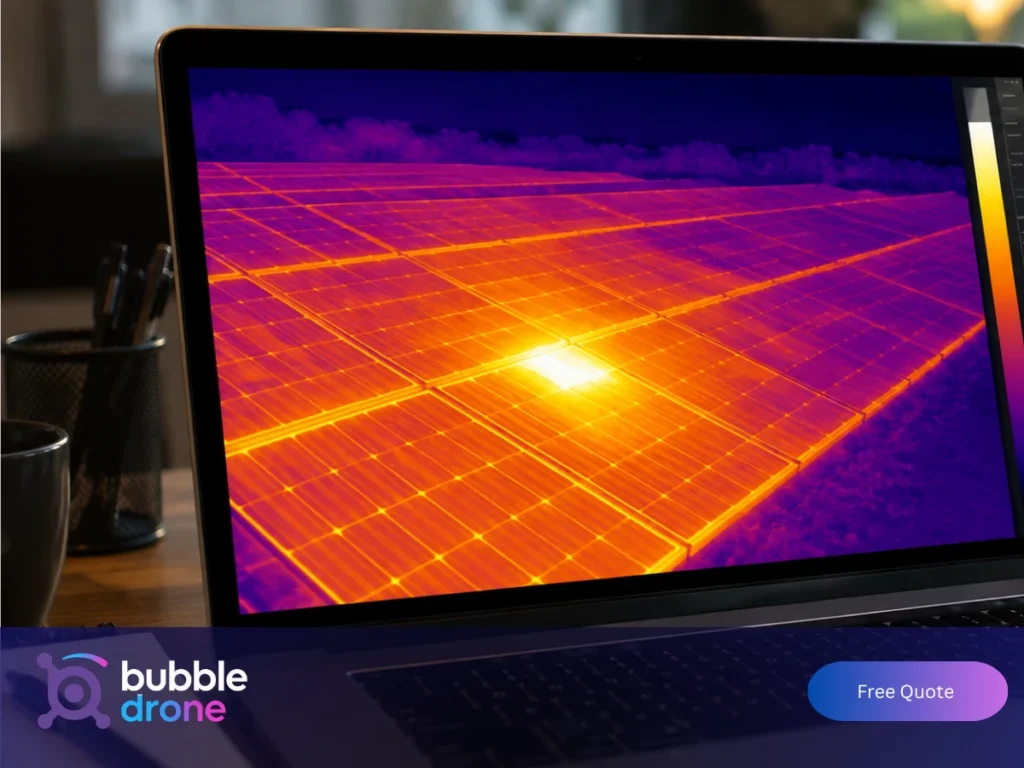
The two data types used are RGB and thermal. RGB is standard visual imagery, the kind you’d get from any high-resolution camera. Thermal imaging uses an infrared sensor to detect heat patterns across the panel surface. Panels that are working correctly produce a consistent thermal signature. Panels with a fault produce a different one, often before the issue is visible in any other way.
Most solar inspection programmes now combine both, since each one catches things the other can’t. This same RGB and thermal combination already underpins a wide range of aerial photography and drone photography work across Ireland, from infrastructure inspection to construction monitoring.
Do Drone Solar Inspections Use RGB or Thermal Imaging?
The honest answer is that RGB and thermal solve different problems. One shows you what’s broken. The other shows you what’s about to be.
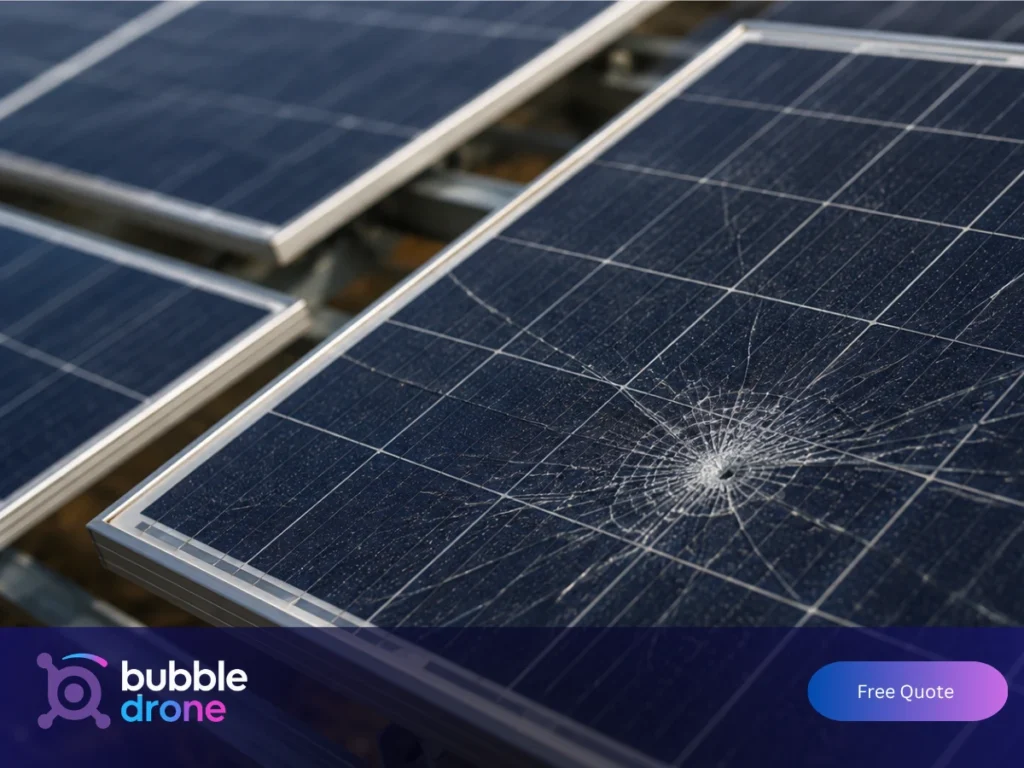
A visual inspection alone will find cracked glass, soiling, bird debris, and loose mounting. All useful. None of it explains why a panel is producing less power than it should when it looks completely fine.
That’s where thermal inspection earns its place. Left unaddressed, a fault like this doesn’t just sit there quietly losing you money. It tends to get worse, and in some cases it becomes a fire risk. That’s the real argument for thermal: not just fault detection, but catching a hazard before it escalates.
Compliant thermal inspections in this space are typically measured against IEC 62446-3, the international standard covering thermographic inspection of PV systems. It’s the benchmark operators and asset managers reference when assessing whether an inspection report meets a defensible standard, rather than just producing pretty heat-map images.
The Drone Solar Inspection Workflow, Step by Step
The process itself follows a fairly consistent pattern across the industry, regardless of whether the site is a small residential array or a utility-scale solar farm.
Flight planning
Before the drone leaves the ground, the operator maps the site and plans a flight path that covers every panel in the array at a consistent altitude and overlap. For larger solar farms, this step alone can take longer than the flight.
Data capture
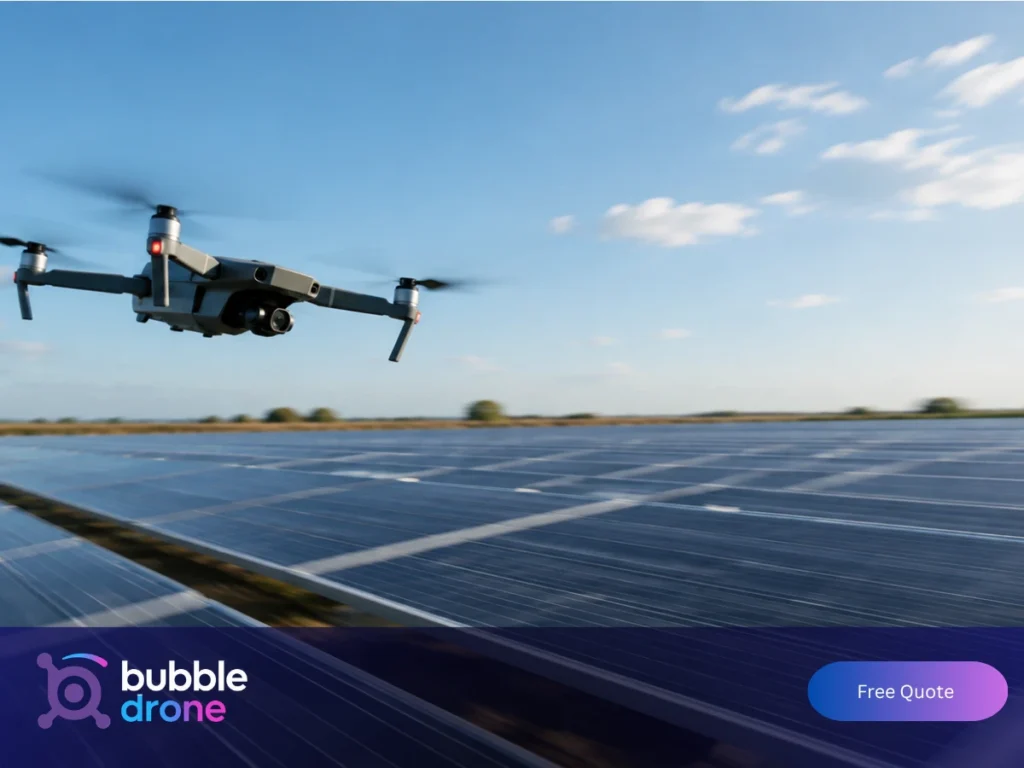
The drone flies the planned route, capturing high-resolution RGB imagery and, where thermal equipment is fitted, infrared data simultaneously. A DJI Matrice or similar enterprise-grade platform with a thermal payload can cover a large solar farm in a fraction of the time a ground crew would need to walk the same site.
Mapping and coordination
Every image gets tied to a specific position on the array so any fault found can be traced back to an exact panel, row, or string. This matters enormously at scale. A 5MW solar farm can have thousands of individual panels, and a report that just says “somewhere in row 12” isn’t actionable.
Analysis
The raw data becomes useful at this stage. Software processes the imagery, flags temperature anomalies, and cross-references them against the RGB data to rule out false positives like reflections or shading. A skilled analyst still reviews the output. Automated flagging speeds things up, but it doesn’t replace judgement.
Reporting
The final output is an inspection report showing exactly which panels have an issue, what type of fault is suspected, and where it sits in priority. A well-built report turns a pile of thermal imagery into a maintenance to-do list.
What Faults Can a Drone Solar Inspection Detect?
The list of things a thermal drone inspection can catch is longer than most people expect:
| Fault Type | What It Indicates |
| Hotspots | Cracked or degraded cells |
| Bypass diode failures | A failed diode within the panel’s circuit |
| String-level faults | An entire row underperforming rather than a single panel |
| Connection issues | A problem at the junction box |
| Soiling and shading effects | Reduced output without visible damage |
Not every anomaly means a failed panel. Shading from a nearby tree can create a thermal signature that looks concerning but resolves itself once the sun moves. Part of what separates a useful inspection report from a noisy one is knowing which anomalies need action and which don’t.
Solar Farm vs Rooftop Solar: Does the Process Change?
The fundamentals stay the same. The scale changes everything else.
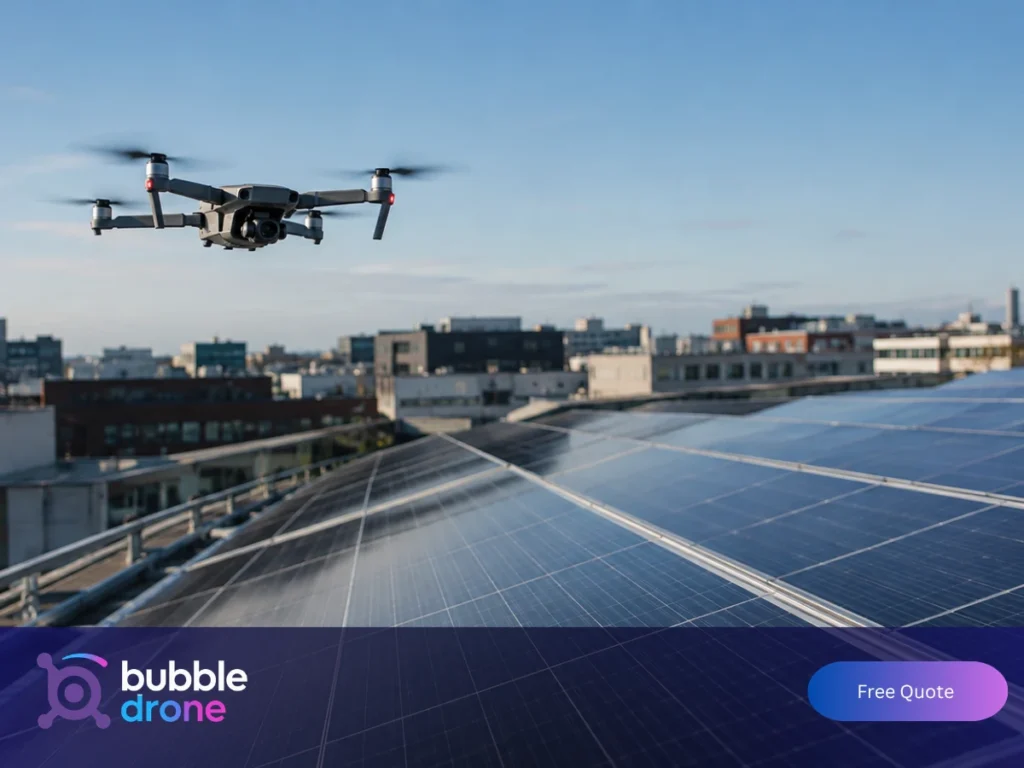
A rooftop solar inspection, whether on a home or a commercial building, is usually a short flight covering a small number of panels. Turnaround is fast, and physical access issues like scaffolding or roof risk disappear entirely once the drone is in the air.
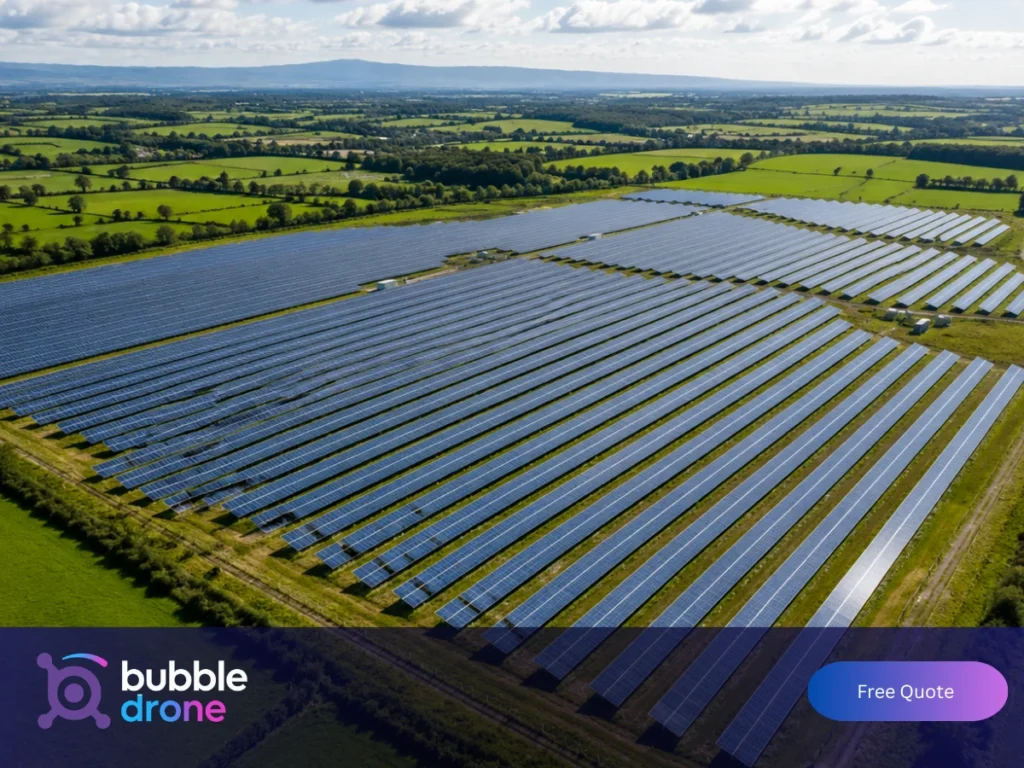
A utility-scale solar farm is a different exercise. Flight planning has to account for hundreds or thousands of panels across a large physical footprint, often with restricted access, livestock, or uneven ground to plan around. Irish solar farms coming online through the RESS auction programme are exactly this scale, and the inspection demands match: repeatable flight paths, consistent data across every visit, and reporting that scales without losing precision.
Why Irish Solar Assets Are Turning to Drone Inspection
Ireland’s solar capacity has grown fast, and it’s not slowing down. Total connected solar capacity reached 2.7 GW by the end of May 2026, according to Solar Ireland’s Scale of Solar 2026 report, up almost 300% since 2023. Utility-scale solar now accounts for 1.59 GW of that figure, and more than 190,000 homes and businesses across the country are generating their own electricity. Nearly 1 GW of new capacity was added in the twelve months to May 2026 alone.
That growth creates a maintenance problem that didn’t exist a decade ago. Manual inspection, whether that’s a technician on foot with a handheld thermal camera or a visual walk-through, depends on weather and daylight in a country that doesn’t offer much of either reliably, and it only ever covers a fraction of a large site. Drone-based inspection solves the coverage problem directly. An entire site gets surveyed with consistent data, on a schedule that can be repeated year after year, without downtime for the asset itself.
For solar farm operators specifically, the return on investment case is straightforward. Catching a failing string of panels six months earlier than a manual inspection would have found it means six fewer months of lost output. At scale, that adds up fast.
Frequently Asked Questions
Does every drone solar inspection use thermal imaging?
No. Some inspections are visual only, which is useful for spotting physical damage, debris, and installation defects but won’t detect electrical faults inside a panel. If fault detection is the goal, thermal capability is essential.
How often should a solar array be inspected by drone?
Most commercial and utility-scale sites run inspections annually, with some higher-value assets opting for a check every six months. Residential systems are typically inspected reactively, when output drops or damage is suspected.
Can a drone inspection replace a manual technician entirely?
Not quite. The drone and thermal camera find the anomaly. A technician still needs to confirm the diagnosis and carry out any physical repair. What changes is how much ground gets covered before a human needs to get involved.
Is thermal drone inspection worth it for a small rooftop system?
For a handful of panels, the cost of specialist thermal equipment can outweigh the benefit compared to a straightforward visual check. The economics shift firmly in favour of thermal once you’re dealing with a commercial rooftop or larger, where the panel count makes manual fault-finding genuinely impractical.
What happens after a fault is found?
The inspection report identifies the panel, string, or section affected and the likely cause. From there, it’s down to the maintenance team or installer to schedule a repair, replacement, or further diagnostic work on site.
Whether thermal is worth commissioning comes down to what’s at stake: a large commercial or utility-scale site justifies it easily, a handful of rooftop panels usually doesn’t. For a visual check, RGB survey and roof inspection work is a more straightforward booking and part of a wider range of drone services available across Ireland. For thermal-specific fault detection, look for an operator who specialises in it directly.