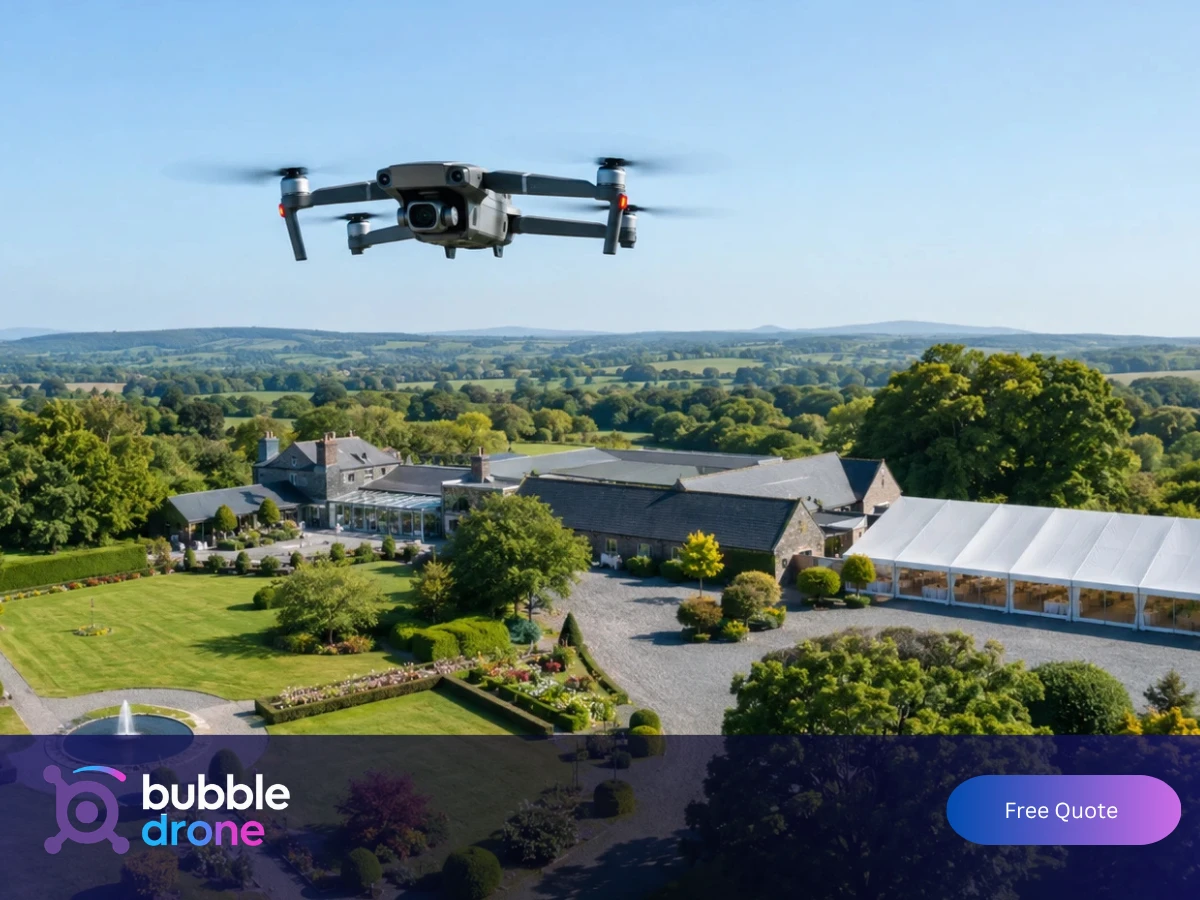
Drone wedding photography gives you aerial shots of your ceremony, venue and guests that no photographer standing on the ground can capture, and in Ireland it’s increasingly offered as an optional enhancement by wedding-media providers rather than an expensive extra.
But there’s a gap between the drone wedding photos couples picture when they book and what actually gets delivered, and it almost always comes down to questions nobody thought to ask before the big day.
The couples who end up disappointed are almost never the ones who booked the wrong supplier. They’re the ones who booked a good supplier without checking the right things first.
Get those checks done early and drone coverage becomes one of the best decisions you make for your wedding day. Skip them and you risk paying for a service that never leaves the ground.
What does drone wedding photography actually add?
A ground-based photographer captures intimacy: the look between a bride and bridegroom, the small moments during the ceremony, the reaction shots that make a wedding album feel personal. A drone captures scale.
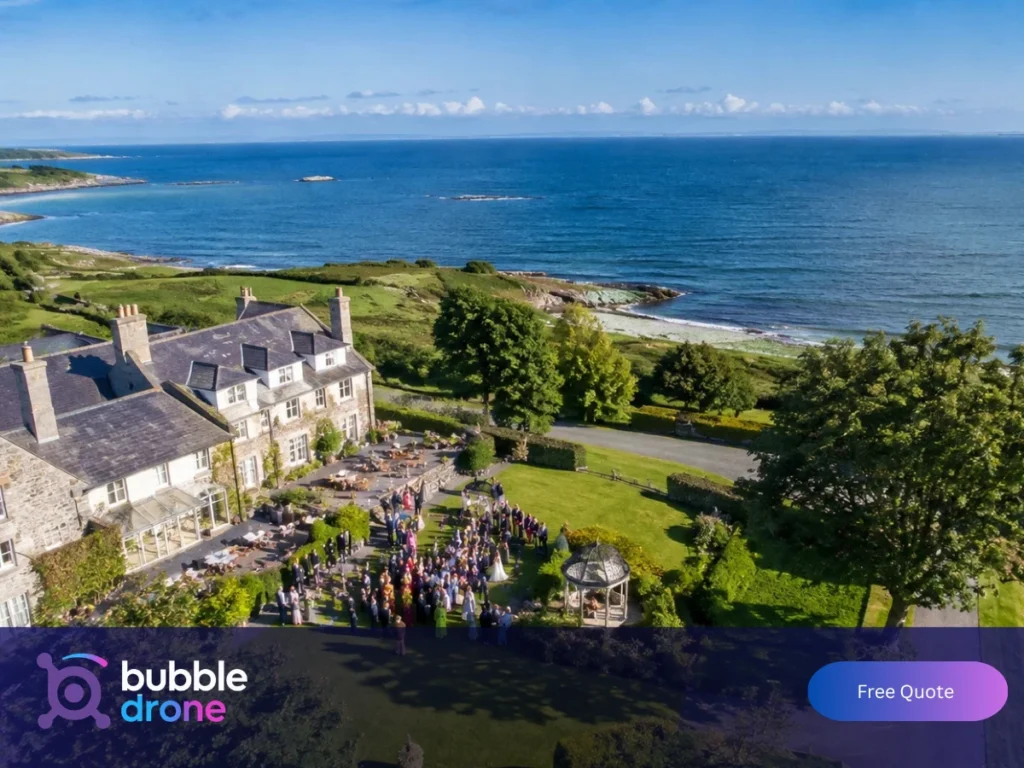
It shows the full sweep of the venue and its surroundings, the shape of the gardens, an elevated group shot planned within safety rules, and the drive away as newlyweds leave for their reception.
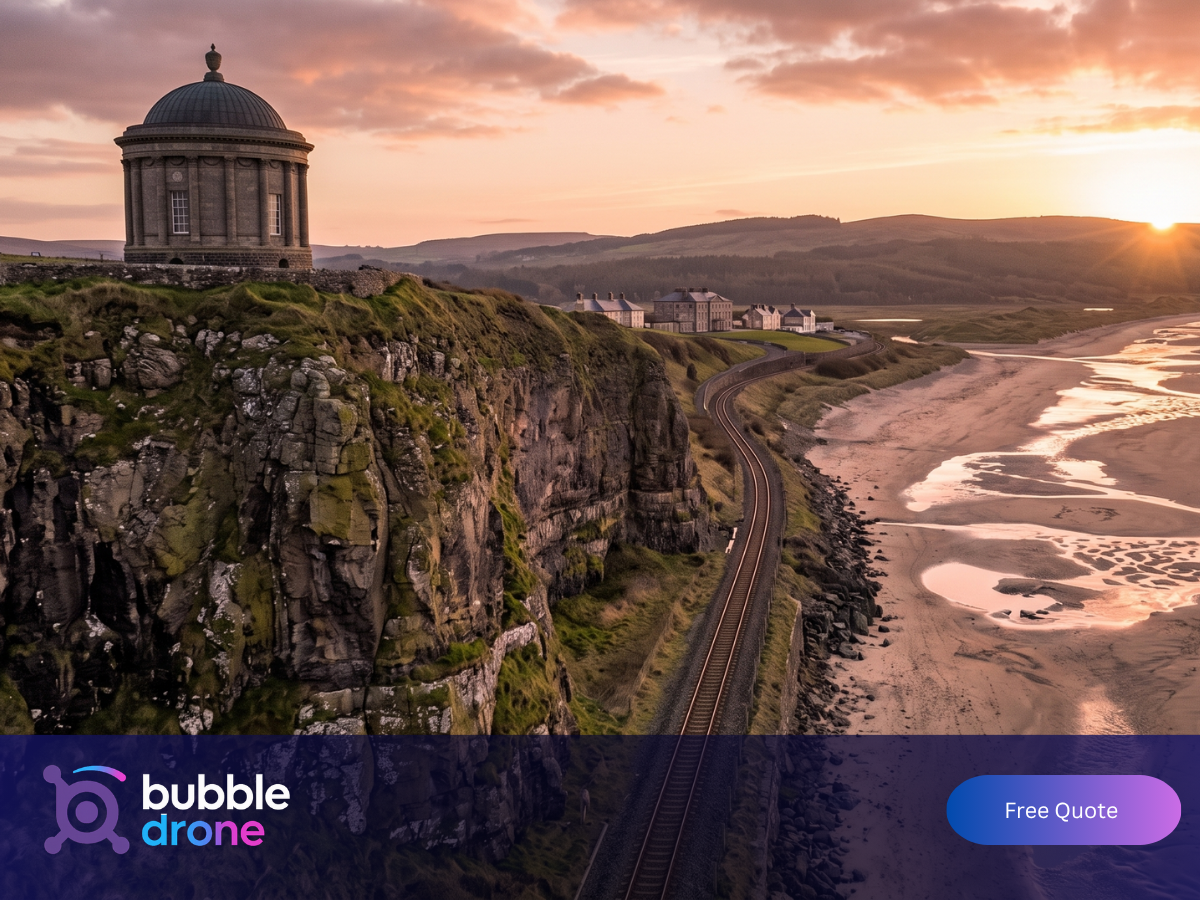
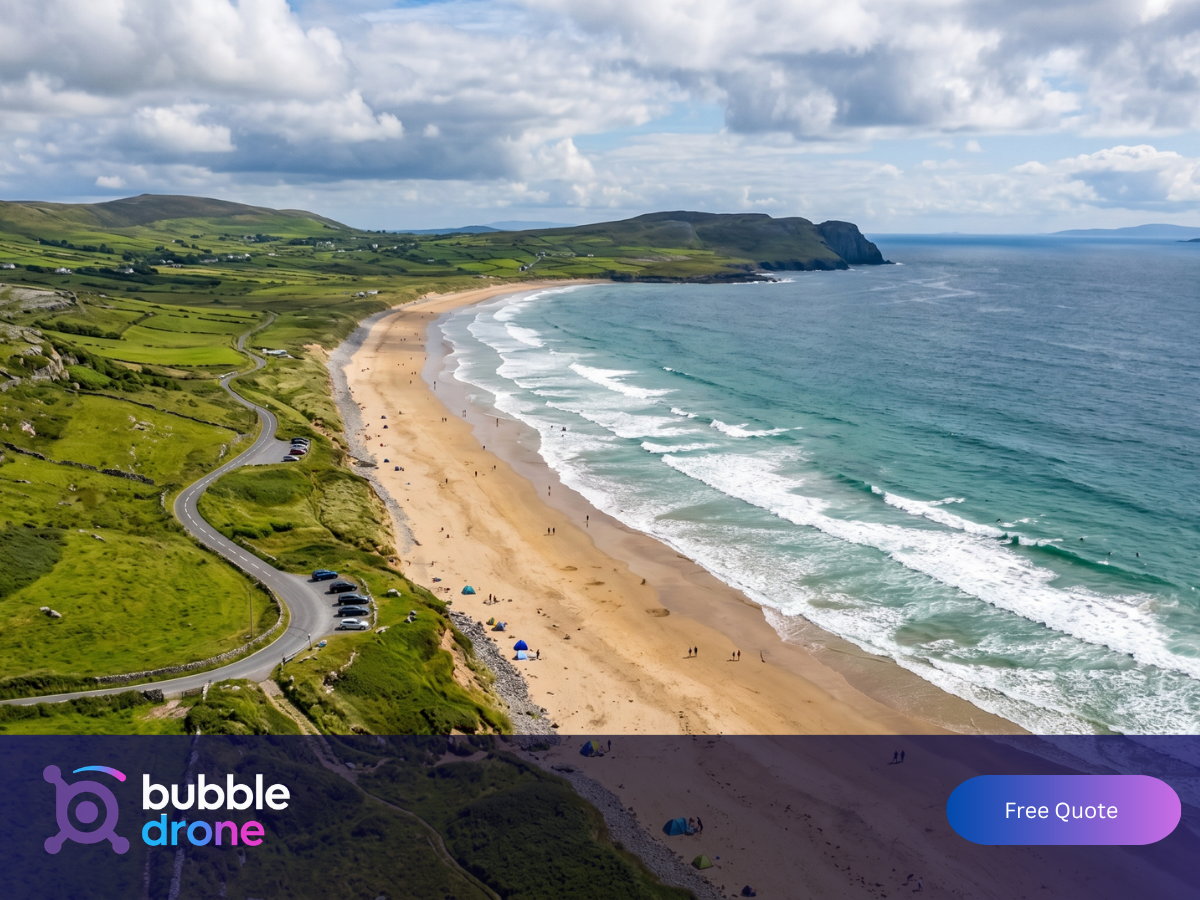
This matters most at coastal wedding venues, where the scale of the setting is often half the reason couples chose it in the first place. These are establishing shots that give your wedding video a cinematic feel, usually less costly and logistically simpler than helicopter-based aerial filming, though prices vary.
The best drone wedding photos aren’t a separate wedding gallery bolted onto your main package. They’re woven through it: an aerial shot opening the ceremony section, a bird’s-eye view of the marquee before guests arrive, a slow rise over the bridal party for the reception.
A bird’s-eye group photograph doesn’t necessarily mean the drone flies directly over everyone. A responsible pilot may position the drone to the side, use a wider lens, or capture the shot before the gathering becomes a crowd, prioritising safe distances over a perfectly vertical image.
Does every wedding venue in Ireland actually allow drones?
No, and this is the question most couples never think to ask until it’s too late.
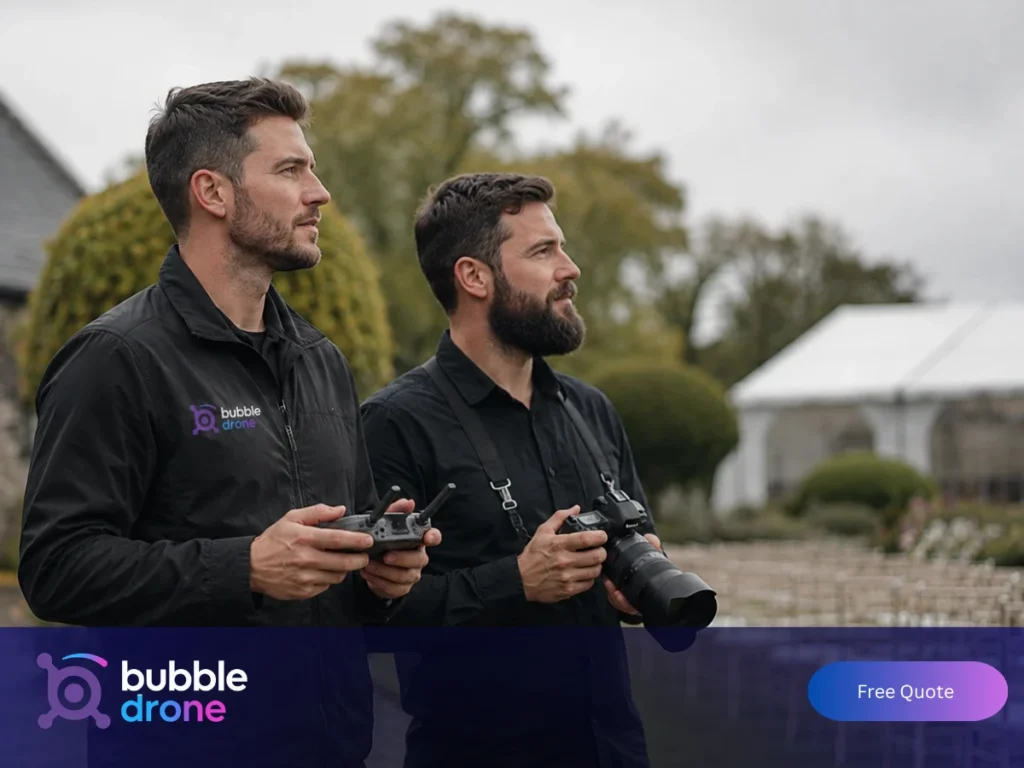
Some historic estates and castle venues restrict drone flights entirely, often because of nearby livestock, other guests, or agreements with neighbouring land.
Others allow it but only during specific windows, away from the ceremony itself, or with advance notice given to venue management. A drone operator who hasn’t checked this in advance can turn up on your wedding day and simply not be allowed to fly.
The fix is straightforward: confirm with your venue directly, and separately confirm your drone photographer has actually asked the same question rather than assuming. A professional service will raise this before the booking is finalised, not on the morning of your wedding.
IAA operator registration is not itself approval to fly at a particular venue. A registered operator still needs to check airspace restrictions, the venue’s own permission requirements, take-off and landing arrangements, nearby aerodromes, privacy considerations and whether uninvolved people are nearby.
If your venue coordinator asks for details before giving the go-ahead, this is the information they’ll want: confirmed take-off and landing zones, how guest safety is managed during the flight, and proof of insurance and IAA registration.
What happens to drone coverage if the weather turns?
Ireland’s weather is the one variable nobody can promise around, and any drone photographer who tells you otherwise isn’t being straight with you.
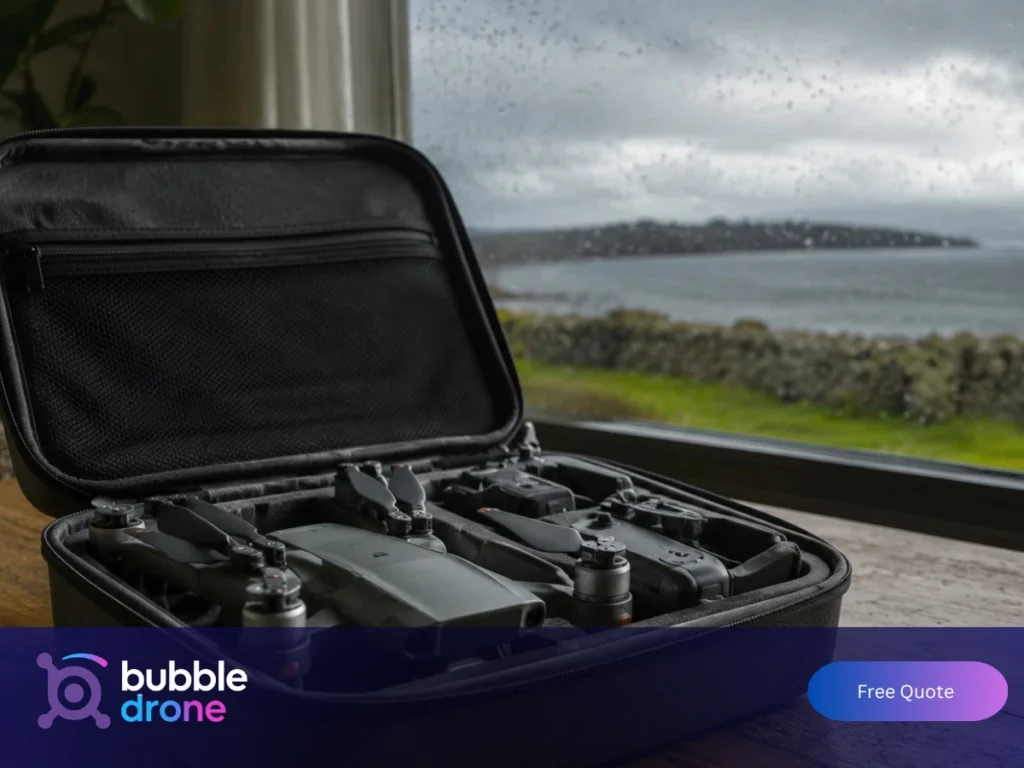
Drones can’t safely fly in high winds, heavy rain, or poor visibility, and safety regulations mean a responsible pilot will ground the drone rather than risk the equipment or anyone nearby. This isn’t a flaw in the service.
Ask when the final go or no-go decision will be made, who makes it, and whether the supplier offers a partial refund, alternative ground footage, a rescheduled visit, or another remedy if the flight is cancelled. This should be stated plainly in the contract, not left to an informal conversation on the morning of the wedding.
Is the drone operator the same person as your wedding photographer?
Usually not, and that’s actually a good thing.
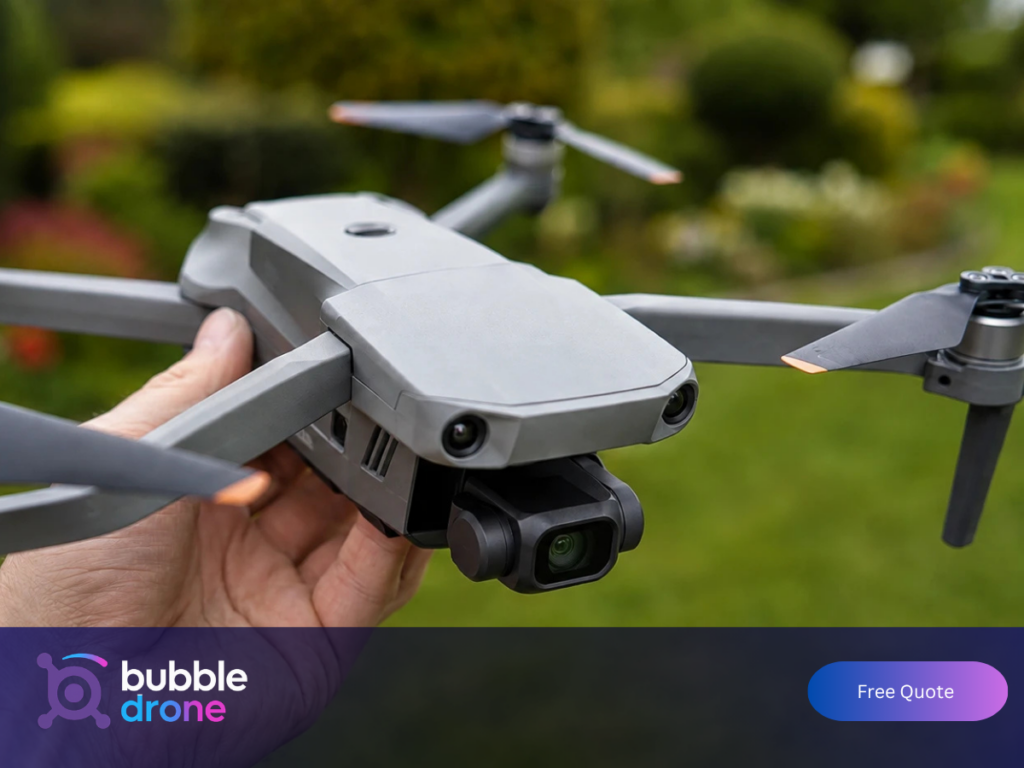
Flying a drone safely during a wedding takes full attention: monitoring airspace, watching for guests moving unexpectedly into the flight path, tracking battery life and weather in real time. Asking your main wedding photographer to do this alongside their usual coverage spreads their attention too thin.
Most couples get better results treating drone coverage as a specialist second shooter working alongside their existing photographer or videographer, rather than a replacement for either.
The drone operator captures the aerial images and establishing shots. Your photographer keeps their full focus on the ceremony, portraits and candid moments on the ground.
If you already have a wedding photographer booked, ask them how they feel about a drone operator working alongside them on the day. Many photographers and videographers can coordinate with a drone operator without issue.
Aerial coverage works best when it supports the photographer’s timeline rather than competing with it: a venue establishing shot before guests arrive, an exterior ceremony shot during an agreed quiet window, and an elevated group image planned around the portrait session, not during it.
Ask whether the drone operator will share a shot list and schedule in advance so nobody is improvising on the day.
Is your drone wedding photographer licensed and insured?
This is the part most couples skip, and it’s the one that matters most.
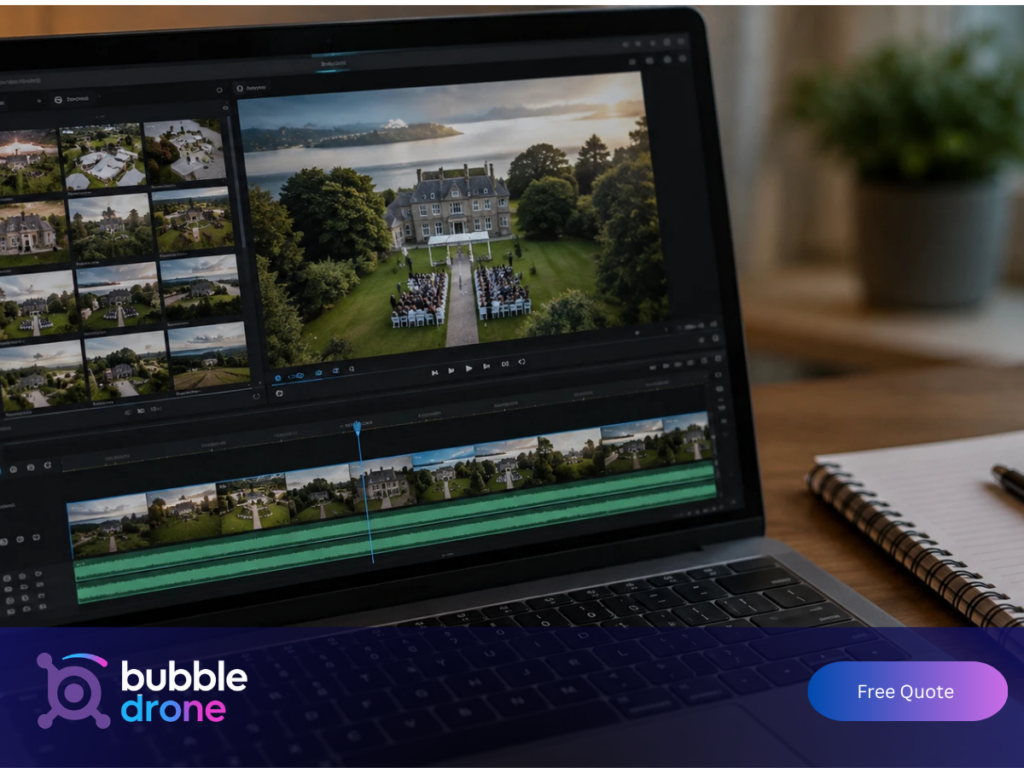
Anyone offering professional drone services for a wedding in Ireland needs to be registered with the Irish Aviation Authority as a drone operator.
This applies regardless of drone size: any drone weighing 250g or more, or carrying a camera capable of capturing personal data, must be registered before it can legally fly, which covers virtually every drone used for wedding photography.
Registration produces an Operator ID that must be displayed on the aircraft, valid for two years, and drones over 250g additionally require an online training certificate valid for five years.
Rather than accepting a vague claim of “fully licensed”, ask for the operator’s IAA Operator ID directly, what pilot competency certification they hold, and whether the planned flight requires additional IAA Operational Authorisation depending on the venue and airspace.
A professional operator should be able to explain the difference clearly and show the registration on request.
A drone pilot without commercial third-party insurance is a risk you don’t want to be carrying on your wedding day. A wedding is not casual recreational use, so it’s reasonable to ask for evidence of appropriate liability cover rather than assume it’s in place.
How much does drone wedding photography cost in Ireland
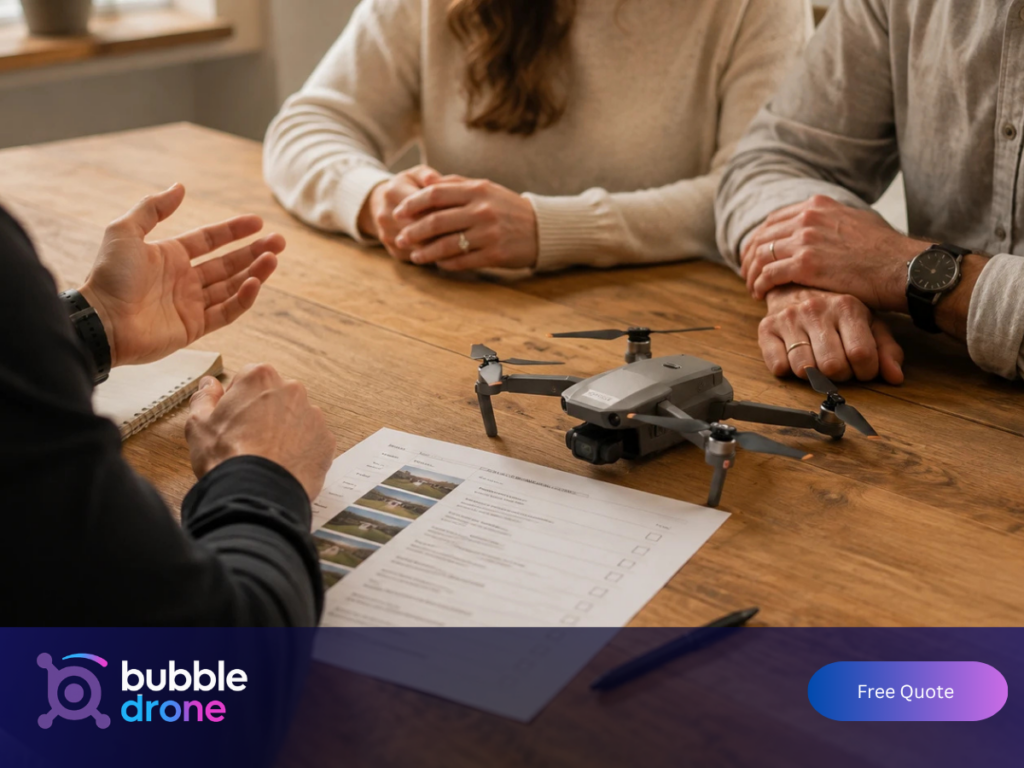
Pricing varies more than most couples expect. A short add-on covering aerial shots of the venue and an elevated group image costs considerably less than full-day drone coverage integrated with a wedding video from start to finish, and the gap between the two comes down to flight time, editing, delivery format, and whether stills, video or both are included.
weddingsonline’s most recent Irish wedding survey, based on over 1,000 couples surveyed in December 2025, put the average wedding spend at €36,641 excluding the honeymoon, up from €34,392 the year before.
Drone coverage is worth framing as a targeted visual upgrade against that overall budget, not as a fixed line item every couple pays the same amount for.
Rather than quoting a single number that means nothing without context, the honest answer is that most couples pay somewhere in the region of a few hundred euro for focused aerial coverage, with full-day cinematic packages costing more.
When comparing quotes, check that you’re comparing the same things: number of flight windows or locations, whether stills, video or both are included, edited highlight film versus unedited files, travel charges and VAT, venue and airspace checks, weather cancellation terms, delivery resolution and turnaround time, and whether a second operator or ground camera is included.
The right way to find your actual figure is to describe your wedding day, your venue and what you want captured, and get a tailored quote based on that.
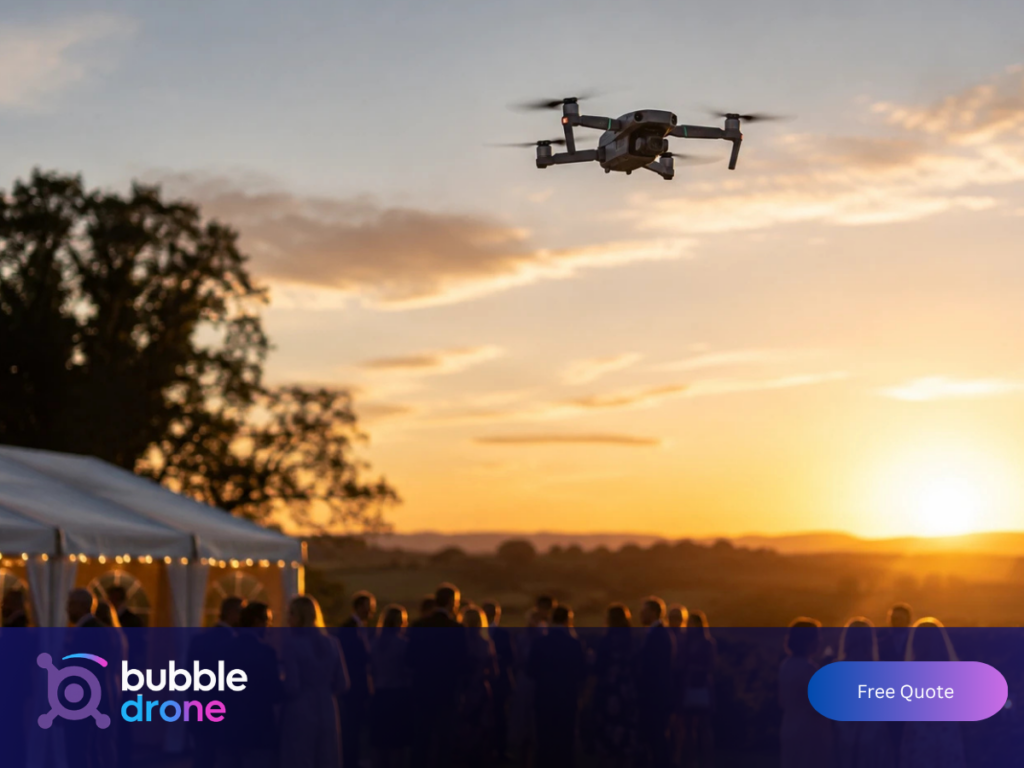
What should you ask a drone wedding photographer before booking?
A few direct questions before you commit will save you from most of the problems couples run into with drone wedding photography:
- Venue permission confirmed in writing, not just assumed.
- Weather contingency and what remedy is written into the contract if the flight is cancelled.
- IAA operator registration and pilot competency certification, shown on request.
- Commercial third-party insurance, with evidence rather than a verbal assurance.
- Whether the location involves controlled or restricted airspace that needs additional authorisation.
- Coordination with your existing photographer or videographer, confirmed in advance.
- Delivery format and turnaround time for your final images and footage.
- Any supplier worth booking will answer all of this without hesitation, because they’ve already thought about it.
Ready to book drone wedding photography in Ireland?
Get the questions above answered before you book, and the aerial shots become some of the images you keep coming back to years later, the ones that show your wedding day the way you actually remember feeling it: bigger than the room you were standing in.
If you’re planning a wedding in Ireland and want drone coverage that’s actually been checked against your venue and your day, the conversation is worth having early, not once the rest of your bookings are already locked in.